Support and resources
PTLD is a rare disease. It can be hard to find support or resources that are relevant or are shareable with others. This page has some starting points, so you don’t have to go through this alone.
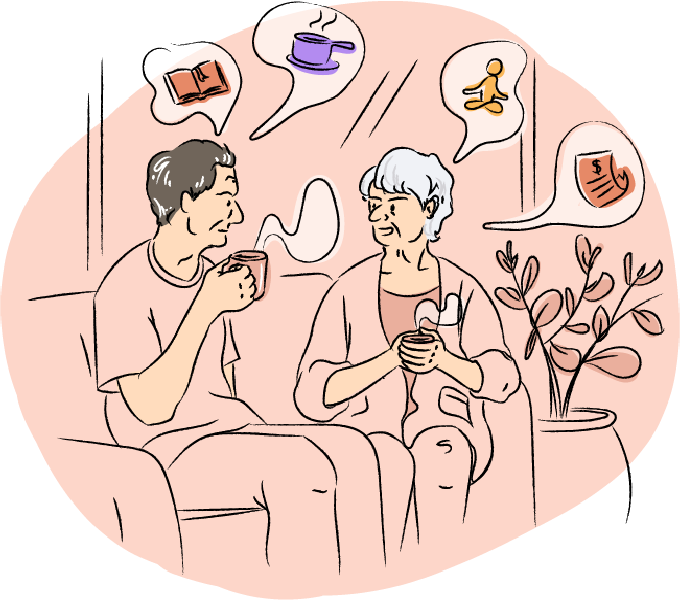
 Types of support to consider
Each person’s situation and needs are different, and may change over time. It can be hard to ask for help, but there are people who want to help.
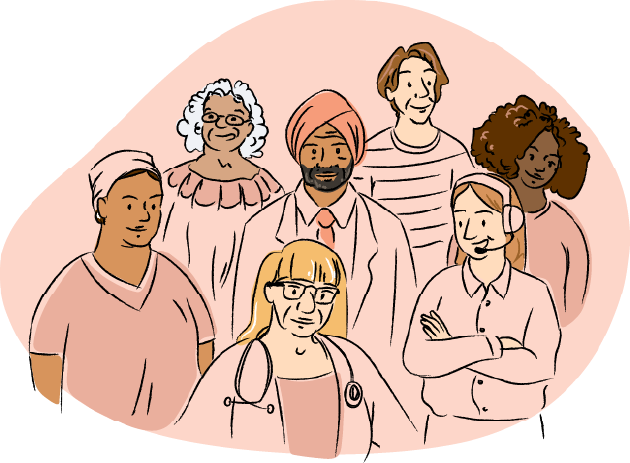
- Your transplant team
- Family and friends
- Local or online communities
- Nonprofit groups
- Local support groups
- Social workers
- Therapists
- Patient associations and patients groups



- Grabbing groceries.
- Cooking.
- Cleaning.
- Rides to and from appointments.
- Chores.
- Checking mail.
- Listening and taking notes at appointments.
- Looking out for symptoms and side effects.
- Family.
- Friends.
- People in your community or neighborhood.
- Hospital and patient associations groups.

- Physiotherapist or physical rehabilitation therapist.
- Occupational therapist.
- Mental health professional.
- Registered dietician or nutritionist.
- Support groups where patients can share personal experiences.
- Nonprofit group resources for patients.

Use the interactive map to find relevant PTLD patient group support organisations in your country.
AEAL
AEAL
Avda. de Córdoba, 15 - 2B
28026 - Madrid
Phone: 91 563 18 01
E-Mail: info@aeal.es
Website: https://www.aeal.es
FETCO
FETCO
c/ Isla Cabrera, 38 bajo dcha.
46026 - Valencia
Phone: 600 441 065
E-Mail: info@fetco.es
Website: https://www.fetco.es
La Lampada di Aladino
La Lampada di Aladino
Monza
Phone: 039 882505
E-Mail: info@lampada-aladino.it
Website: https://lampada-aladino.it
BDO – Bundesverband der Organtransplantierten e.V.
BDO – Bundesverband der Organtransplantierten e.V.
Postfach 1126
38711 Seesen
Phone: 05381 4921735
Fax: 05381 4921739
E-Mail: post@bdo-ev.de
Website: www.bdo-ev.de
Hubert Knicker
Hubert Knicker
Wikingerweg 6
32549 Bad Oeynhausen
Phone: 05734-666882
E-Mail: hubert.knicker@web.de
Website: www.Selbsthilfe-fuer-Menschen-vor-und-nach-Organtransplantation.de
Leukämiehilfe RHEIN-MAIN e.V
Leukämiehilfe RHEIN-MAIN e.V
Hasslocher Strasse 118
65428 Rüsselsheim am Main
Phone: 06142 3 22 40
Fax: 06142 17 56 42
E-Mail: buero@lhrm.de
Website: https://www.leukaemiehilfe-rhein-main.de
Sie erreichen uns telefonisch oder per Mail:
Mo – Do: 8:30 – 15:00 Uh, Fr: 8.30 - 12:30 Uhr
Besuche bitte nur nach vorheriger Absprache / Anmeldung
ALCER
ALCER
c/ Constancia, 35
28002 - Madrid
Phone: 915 610 837
E-Mail: informacion@alcer.org
Website: https://alcer.org
FNETH
FNETH
c/ Doctor Castelo, 31 - bajo D
28009 - Madrid
Phone: 917 396 872
E-Mail: secretaria@fneth.org
Website: https://fneth.org
UNIAMO
UNIAMO
Roma
Phone: 06440 4773
Phone: 06455 55179
E-Mail: segreteria@uniamo.org
Website: https://uniamo.org
Explore tools and resources to help understand PTLD.


- Blood stem cell transplant. In a blood stem cell transplant, blood stem cells from a donor are put into your body through a central line. Blood
stem cells are collected from three places:
- bone marrow
- peripheral blood
- umbilical cord blood
- Epstein‑Barr virus (EBV). EBV is one of the most common viruses that people can get. It is also known as human herpesvirus.
Most adults will have had an EBV infection and carry EBV without any symptoms. EBV may cause symptoms in people with a weakened immune
system.
- Epstein‑Barr virus (EBV) active state: When EBV is in its active state, it can make many copies of itself and spread. The active state is also called the lytic phase.
- Epstein‑Barr virus (EBV) dormant state: When EBV is in its dormant state, it does not make copies of itself and spread. It hides inside B cells and can cause them to multiply abnormally. T cells keep these B cells under control. EBV in its dormant state is harder for the immune system to detect and get rid of. This is how EBV can stay in the body without causing symptoms. EBV in its dormant state may become active again if the immune system is weakened. The dormant state is also called the latent phase.
- Graft-versus-host disease (GvHD). Graft-versus-host disease is when the donor’s immune cells from the transplant attack your body.
Immunosuppressants must be taken to prevent this. - Immunophenotyping. Immunophenotyping is a lab test that tells white blood cells apart by the features or 'markers' on their surface. The results help doctors diagnose diseases like lymphomas and PTLDs. The test is done on tissue samples, like blood and bone marrow.
- Lymphocytes. Lymphocytes are white blood cells. They are a part of your immune system. There are three main types: T cells, B cells and natural killer (NK) cells. Each type of lymphocyte protects your body from infections and diseases in its own way.
- Lymphoma. Lymphoma is a type of blood cancer that begins in your lymphocytes. Lymphocytes are a type of white blood cell. There are two main types of lymphoma: Hodgkin lymphoma and non-Hodgkin lymphoma. Certain lymphomas that appear after a transplant are considered PTLDs.
- Post‑transplant lymphoproliferative disease or disorder (PTLD). PTLD stands for:
- Post
- Transplant
- Lymphoproliferative
- Disease or Disorder
PTLD is when your lymphocytes grow out of control after a transplant. It can develop in anyone taking immunosuppressants after a transplant.
PTLD is a group of diseases. It includes certain kinds of growths and lymphomas. PTLD can become life-threatening. It needs to be brought up to the transplant team so they can diagnose and treat it quickly.
PTLD is often linked to the Epstein‑Barr virus (EBV). If there is a link, it’s called EBV‑positive PTLD. If there is no link, it’s called EBV‑negative PTLD. - Solid organ transplant. In a solid organ transplant (also called SOT), a whole or part of a healthy organ from a donor is put into your body.
The organs that can be transplanted are: kidney, liver, heart, lung, intestines and pancreas.
A multi-organ transplant is when more than one organ is transplanted. - T-cell removal. T-cell removal is the process of removing or reducing T cells from donor grafts in blood stem cell transplant. It is done to lower the chances of GvHD. T-cell removal is also called T-cell depletion.
- Transplant rejection. Transplant rejection is when your immune system attacks the donor tissues or cells. Immunosuppressants must be taken to prevent this.
- White blood cells. White blood cells are a part of your immune system. There are different types of white blood cells: granulocytes (neutrophils, eosinophils, and basophils), monocytes and lymphocytes (T cells, B cells, and NK cells). Each type of white blood cell protects your body from infections and diseases in its own way.